OPENING VIBES
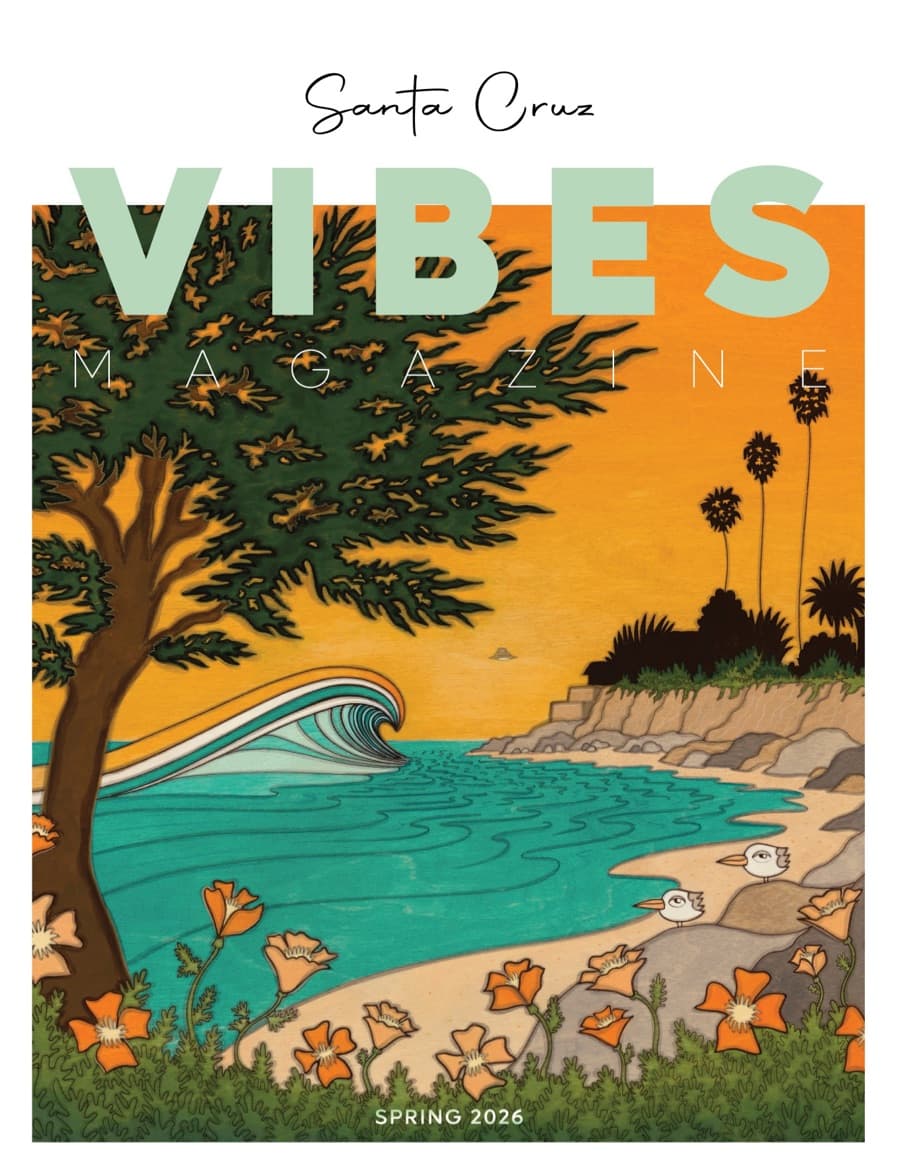
This was supposed to be a standard editorial — just a preview of the Spring issue. I planned to mention The Order of Time by Carlo Rovelli as a passing reference to the change of a season. But after multiple listens and a read-through of the book over the last year, the message in The Order of Time just stuck with me. It keeps slipping into conversations, internal thoughts, and the idea at the center — I started seeing it everywhere. This tidbit will not be surprising to my family and friends — and it ended up taking over this entire Opening Vibe.
In the book, Rovelli argues that time, as we experience it, isn’t steady. There’s no universal “now,” no single line carrying everything from past to future. Time is local, dependent on where you are and how you move. The laws that describe the universe don’t really deal in time the way we think; they describe events — things happening, interacting, changing — but not a steady flow underneath it all. Even the direction we assign to time — that sense that it moves forward — seems to come from entropy, the gradual shift from order to disorder.
I’ll be honest, “entropy” is a word I only really grasped the meaning of this past year, digging into books like this and trying to understand where we come from and how this all works. At its simplest, it’s the idea that things tend to move from organized to less organized over time. And if that’s the case, it is possible what we’re calling time is just how we make sense of everything changing. Maybe, as Rovelli suggests, what we’re really experiencing is just a series of events — moments, changes, interactions — rather than some universal clock moving everything forward.
If you step back for a second, it starts to feel familiar. We already experience time as uneven. Some moments stretch — a conversation that holds longer than expected, a night that seems to stand on its own — while others disappear entirely. Days blur, weeks compress, and entire seasons pass without leaving much behind. If time were truly steady, it wouldn’t feel like that. But it does — because I think what we’re really experiencing may not be time at all, but something much older than precise construct we only recently built and named to measure it: I think this all might instead be about our immediate relationship to what’s happening, our attention, our presence, and whether we were actually there for it.
That’s where this started to shift for me. Spring has a way of making that visible — not because time moves differently or just because we’re creating this magazine right now — but because we notice it differently. The light changes, the energy shifts, people come back outside, and there’s a quiet sense that something is starting again. Not from zero, but from wherever we left off. If time isn’t this fixed, universal thing, then seasons aren’t just markers on a calendar. They are shifts in how we experience the world — what we notice, how we move, and what we’re open to.
Somewhere along the way, we didn’t just measure time as a frame of reference — we tightened it. We turned it into something rigid. Structured. Always on. Schedules, deadlines, notifications, constant movement. Everything tracked. Everything is optimized. And I think that’s where it starts to wear on us. Because time, the way we’ve built it into our lives, isn’t neutral anymore. It carries pressure. It creates stress. It makes it feel like we’re always catching up, always moving to the next thing before the current one has fully landed. And the harder we try to stay on top of it, the easier it is to miss the moment we’re actually in.
When I step back even further, it gets a little heavier. The version of time we live by — measured, scheduled, exact — is a relatively new invention, really only taking shape around 5,000 years ago with early calendars and systems of record. What isn’t new is us. That deep cognitive awareness — what some call a kind of “great awakening” in human consciousness — began tens of thousands of years ago, when we first developed the ability to reflect, to remember, to imagine what comes next. So now we exist in this weird overlap: a precise system of time we live by… and a mind that knows it’s moving through it. No wonder it can feel like a lot these days.
I think there’s a chance we accidentally built a system of exact measurement that moves faster than we’re wired to currently cope with. And maybe that’s part of why something that used to come so naturally — a basic instinct of connection, community, just being with each other — can feel harder to find now.
It’s a topic we touched on in the Winter issue editorial — this sense that we’re all searching for community again. Not because it disappeared, but because somewhere along the way, it became harder to access. What was once a state of being now takes intention. I’m still sorting this out, but it feels like the way we’ve structured time, especially in a modern, always-on world, has made that even harder. Not because we don’t have time. But because we’re rarely fully inside of it. Because real connection doesn’t happen on a schedule. It happens when things slow down enough to register. When a conversation isn’t rushed, when a room feels locked in, when people are actually there.
They say print is dead, but I’d argue the opposite for this exact reason we are discussing. This print format, these words you are currently reading, is rare in the fact that it forces you to stop. To pause. To actually be present with something, looking at images, reading words, without the ability to scroll away. And that feels like it matters more than ever. Because if time is really just a series of events, then what we’re doing with Vibes starts to feel all the more intentional. Through experiments like the “Vibes Story Menu,” where we partner with local restaurants to create more intentional dining experiences, we’re trying to create space for those moments — places where people slow down, connect, and actually share something real.
And that’s where this all starts to connect, not just to the book, but to what we’re celebrating, and creating space for here in these pages. It feels like Vibes came into my life at just the right time. The magazine, podcasts, TV network, everything we’ve created, has helped me slow down and connect more deeply. I’ll be honest, it’s also led to its fair share of anxiety — the little white pill I take in the morning — and therapy is a very new thing for me. I’m working hard on enjoying Vibes as much as I get from helping build it. I feel far off that goal, but I’m getting there. And maybe that’s part of it too.
Because when I think about time — not in theory, but in real life — I think about my dad, who passed away a few years ago. My grandparents, who aren’t here anymore. And at the same time, my children, who feel like they were just born yesterday, are now spread across the country, thriving, living out their own stories. And I catch myself thinking, “Wasn’t I just that kid?” No, I’m not. I’m going to watch $5 movies on Tuesdays at 41st Avenue because, happily, I’m a senior citizen in the Fandango app universe.
Somehow, all of those moments exist perfectly together. They all hold equal weight. They all matter. I came to a place a while back where I’m very comfortable with the idea that I won’t always be here (my kids hate this conversation), but not in a heavy way, just in a real, practical way. A way that makes the present feel a little sharper, a little more important.
If, as Rovelli says, time isn’t something fixed, if it’s just a series of events we’re moving through, then what matters isn’t how much “time” we have. It’s what we do with the moments that actually land. That’s what every issue of Santa Cruz Vibes is about. Not just what’s in it — but what it holds. Stories that slow you down. Conversations that feel real. Moments where something actually happens between us. The difference is in what holds its shape — both in the moment, and in what we know will be meaningful in the end. Not longer. Not bigger. Just real.
Time keeps moving. But every once in a while, an event makes it feel like it’s not. I think we simply need to search out more of those moments.